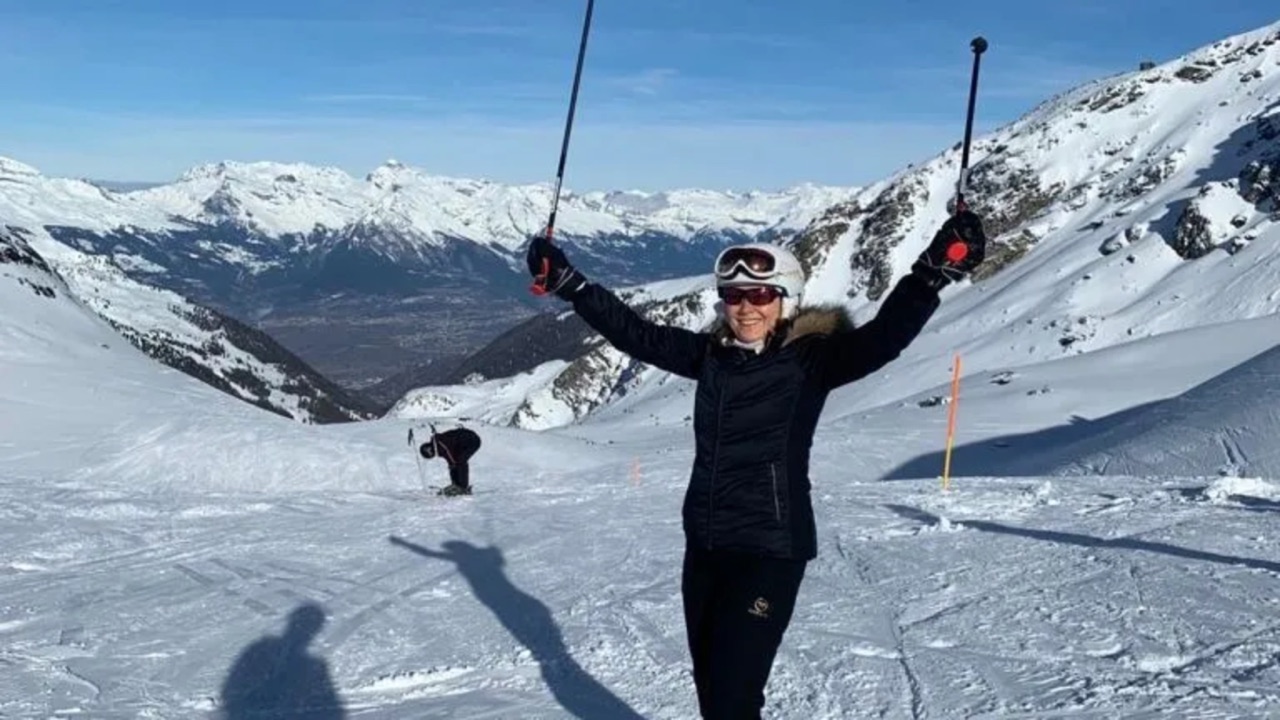
Last month I took some time off to go skiing with my family. Standing at the top of the mountain, I noticed something. I find that in skiing every run teaches me something I end up using with the leaders I work with. Here is what stayed with me this time:
1. Intolerance to falling
If you have not fallen in a while, your first fall hits differently. The nervous system has no recent memory of recovery. So when it happens, the impact is disproportionate. You tense up. You start skiing defensively. And that defensiveness makes the next fall more likely, not less. I see this constantly in leadership. A missed promotion that was expected. A deal that collapsed late. A key relationship that deteriorated faster than anyone anticipated. When you have not practised recovering from setbacks, even a small one can feel catastrophic. It changes how you carry yourself into the next room, the next meeting, the next decision. The skill is not avoiding the fall. It is building tolerance to it. Deliberately. Before you need it.
2. Bad falls happen at the end, not on the difficult slopes
The worst falls rarely happen on the steepest terrain. They happen at the end of the day. When focus has drifted. When the body is tired and the mind has already moved on to après-ski.
Leadership is the same. A CEO navigates the toughest restructuring with clarity and precision, then gets into serious trouble with the board over something that felt minor. A leader gets through the most demanding client crisis only to stumble on an unresolved tension with a colleague they have been avoiding for months. The difficult moments sharpen us. It is the moments after them, when we think the hard part is over, that catch us off guard.
Where is your focus drifting right now?
3. The micro moment of fear
At high speed, fear does not arrive as a thought. It arrives as a sensation. A slight rise in heart rate. Heat moving through the chest. A change in breath. If you are not practised at reading those signals, they move quickly from sensation to thought to reaction. And the reaction, at speed, can be costly. In leadership the sequence is identical. The body registers threat before the mind does. If you have not learned to recognise how fear shows up in you specifically, it will manifest as a reactive decision, a sharp word, a withdrawal, a control move. The work is not to eliminate the fear. It is to catch it at the sensation stage, before it becomes behaviour.
What does fear feel like in your body? And how quickly do you notice it?
4. Following a good skier
When you ski behind someone better than you, your technique improves almost without trying. You find a rhythm you would not have found alone. You go faster than you thought you could. And the gap matters.
If the person ahead is too far beyond your current level, you will not follow. You will be left behind, and the experience will not build confidence. It will erode it.
Leadership development works the same way. Find someone whose thinking you want to be in proximity to. Someone who is far enough ahead to stretch you, and close enough to your current reality to be useful. Ask for feedback. Ask for advice. Being a great follower is a part of being a great leader.
Who are you following right now?
5. It never looks as steep from the bottom
After you have skied a difficult slope, you look back up and it rarely looks as bad as it did from the top.
The view from the top is dominated by what could go wrong. The gradient. The ice. The distance to the bottom. It triggers the nervous system before you have taken a single turn.
The view from the bottom is evidence. You did it. The slope did not change. You did.
This is the thing about holding tension in leadership. The difficulty rarely lives in the situation itself. It lives in the anticipation of it. In the story the nervous system tells before you have taken the first step. The key is the same on the slope and in the boardroom: look at the next turn. Keep the wider perspective in mind. And start moving.
These are not metaphors I reach for. They are things I live in my body every time I get on the mountain. And they are things I see in the leaders I work with every week.
If this resonated and you want to explore what working together looks like, I would love to have that conversation.